Start-Up Spotlight: Concept Vacuum
10 March 2026
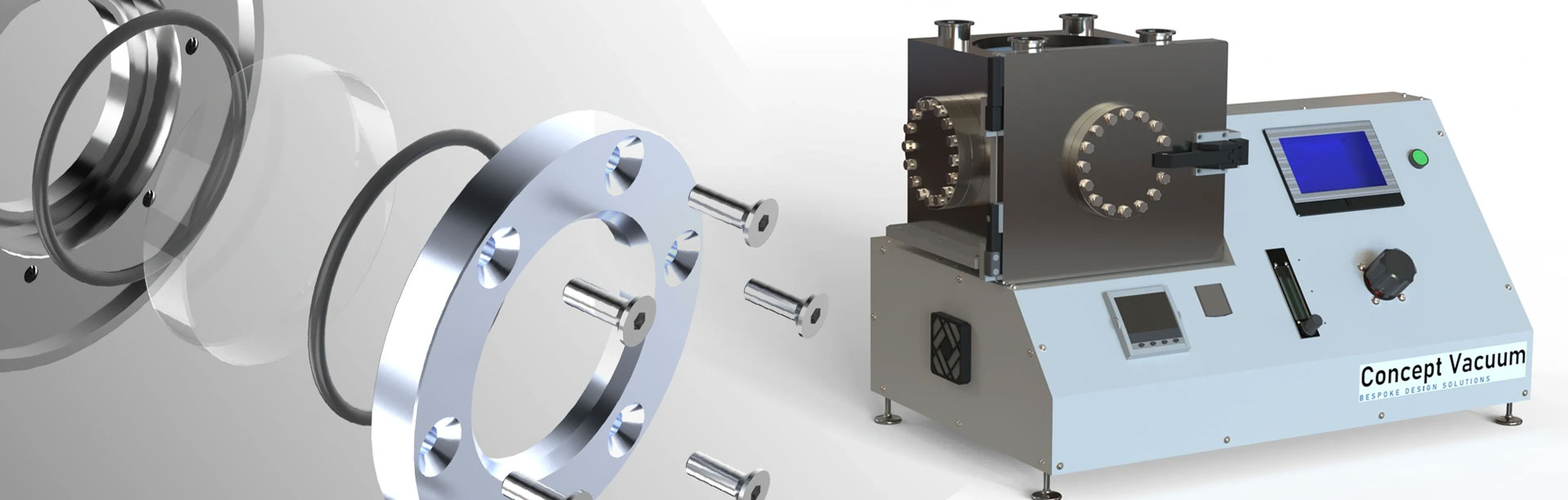
Concept Vacuum designs and builds custom vacuum systems, devices and hardware for demanding engineering and research environments.
Founded in 2022, the Hastings-based company uses SOLIDWORKS to design and simulate complex vacuum equipment. Its systems support semiconductor manufacturing, quantum computing, space industry projects and advanced material research at Universities across the UK.
We spoke to founder, James Keefe, to find out more.
Why did Concept Vacuum choose SOLIDWORKS?
James: “We chose SOLIDWORKS because we’ve used it before, are familiar with it and find it intuitive to use. Also some of the add-ins are very useful in supporting our designs.
“We acquired SOLIDWORKS for free through Visiativ’s SOLIDWORKS for start-ups scheme. This allowed us to hit the ground running with design work without the burden of upfront costs. Applying for the scheme was a very simple form fill and the approval came quickly. Thanks to Visiativ the process was very smooth from initial application to digital delivery of our software.
|
|
“I’d strongly recommend SOLIDWORKS and the SOLIDWORKS Start‑up Scheme to other companies. It gives you full access to the complete SOLIDWORKS Premium toolset – not just 3D CAD – enabling you to turn early ideas into fully developed designs quickly and efficiently.
“It’s helped us accelerate product development at a critical early stage and operate with the same capabilities as much larger engineering companies. After the 12-month free period we continued with SOLIDWORKS Premium and are still using it today.”
Concept Vacuum’s design process
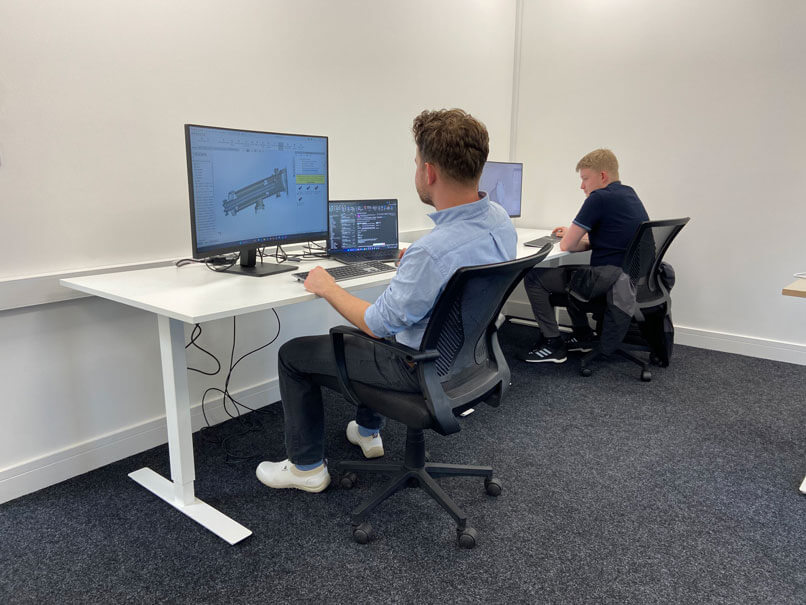
James: “Initial designs usually come from the customer in the form of a rough hand sketch or a crude 3D model. Any 3D geometry we open and review using SOLIDWORKS. We then work closely with our customer to create a 3D model and a drawing of the assembly that fulfils all their requirements.
“Often, we will use SOLIDWORKS Simulation to verify design choices relating to geometry or material thicknesses. Once our customer has approved the design, we will produce a complete set of manufacturing drawings and bill of materials so that we can start machining and ordering.”
|
|
Are there any must-have features or tools?
James: “Traditional modelling is at the core of almost everything we design. Because many of our customer inputs begin as rough sketches or basic models, the powerful parametric modelling tools in SOLIDWORKS allow us to quickly turn those early concepts into fully‑defined, manufacturable 3D models. This helps us iterate rapidly with customers and ensure every design meets their exact requirements.
“Sheet metal is a major part of the vacuum hardware and custom systems we build. The sheet metal feature set lets us design enclosures, panels and complex folded components accurately while maintaining proper bend allowances and flat‑pattern development. This saves both time and cost by reducing errors at the fabrication stage.
“Simulation plays an important role, especially when we need to validate material thicknesses or check how a design will perform under vacuum or structural loads. Testing designs virtually early in the design cycle helps us make informed decisions quickly and prevents costly redesigns later.
“Traditional modelling and the Toolbox feature (included in SOLIDWORKS Professional and up) were most beneficial for this project. There were a lot of parts and being able to create a complete model including all the nuts, bolts and washers ensured that everything was ordered and there were no delays during the assembly phase.”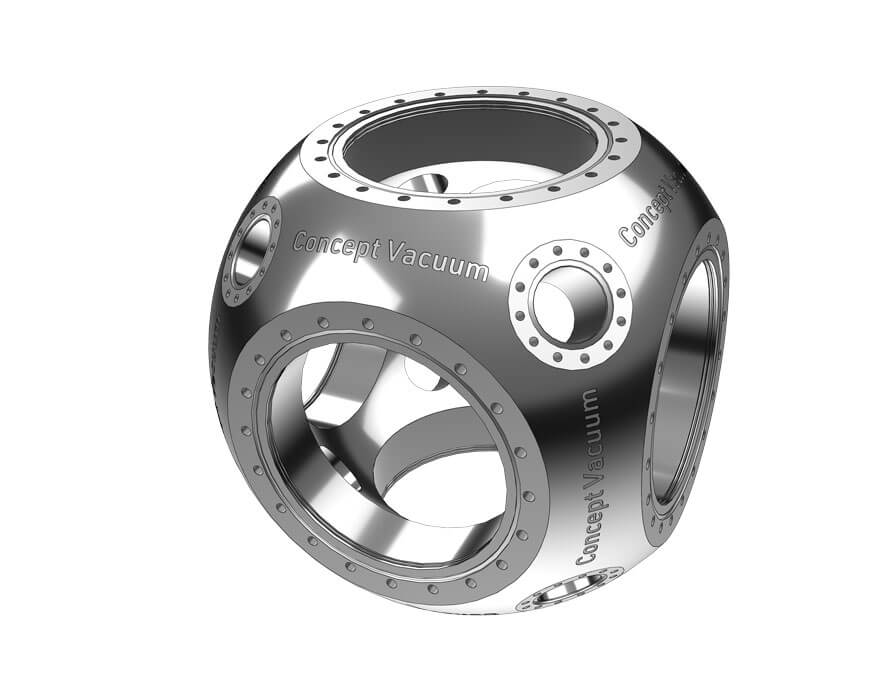
Tell us about a recent project
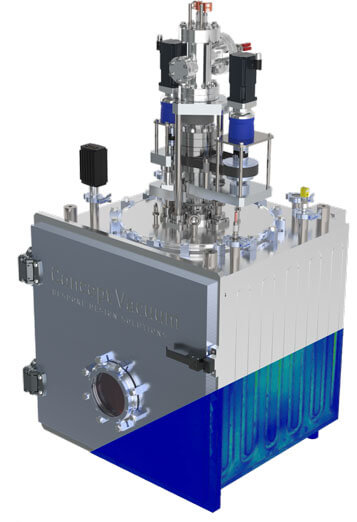
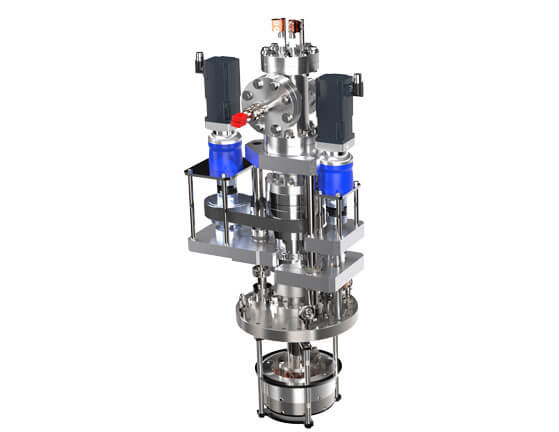
James: “We used SOLIDWORKS to design 2x heater stages that will be used to develop and produce new thin film coatings. The stages operate in an ultra-high vacuum (UHV) deposition system. The first heater stage allows the part that is being coated (the substrate) to be heated to several hundred degrees centigrade and rotated during the deposition process to ensure a robust and uniform thin film coating. The stage then lowers the substrate on to a transfer arm so that it can be moved into the next chamber and onto the other stage. This heater stage heats the coated substrate in the presence of specific gasses so that the desired reaction takes place to create the final intended material.
“The brief was to design two heater stages to fulfil the automatic transfer requirements, be compatible with the environments and heat to the specific process temperatures. Due to space constraints, the designs had to be as compact as possible.
“To minimise costs, we try to use as many standard components as possible. Using SOLIDWORKS, we were able to bring different items in from various suppliers to see which ones would allow us to build the most compact assembly.”
Working with Visiativ
James: “We’ve found Visiativ’s technical support very helpful whenever we’ve needed it. Just the other day we were simulating forces on a vacuum chamber. We wanted to verify the material thickness and geometry were fit for purpose. The results didn’t match our real-world experience, so we contacted the Visiativ engineers. They explained how to constrain the model properly. They also set up the simulation for us quickly so it produced the expected results. Exactly what you need – it’s like having an extra member of the team on-hand.
“The sales process is painless, too. Communication with our account manager is always helpful and responsive. The Visiativ team definitely deserve all the good reviews on Trustpilot!“
What’s next for Concept Vacuum?
James: “Over the next five years, we plan to continue expanding our portfolio of standard vacuum components and custom systems. Many of our bespoke designs are now being developed into repeatable products. We’re preparing to launch an online shop to provide these items directly from stock soon. This shift toward scalable, repeatable product offerings will support sustainable growth while maintaining our core capability in custom engineering. Of course SOLIDWORKS makes this easy, so it’ll continue to be our CAD software of choice as we grow…”
Find out more about Concept Vacuum on their website.
Do you qualify for SOLIDWORKS for Start-ups?
Take the 5 question quiz to find out now!